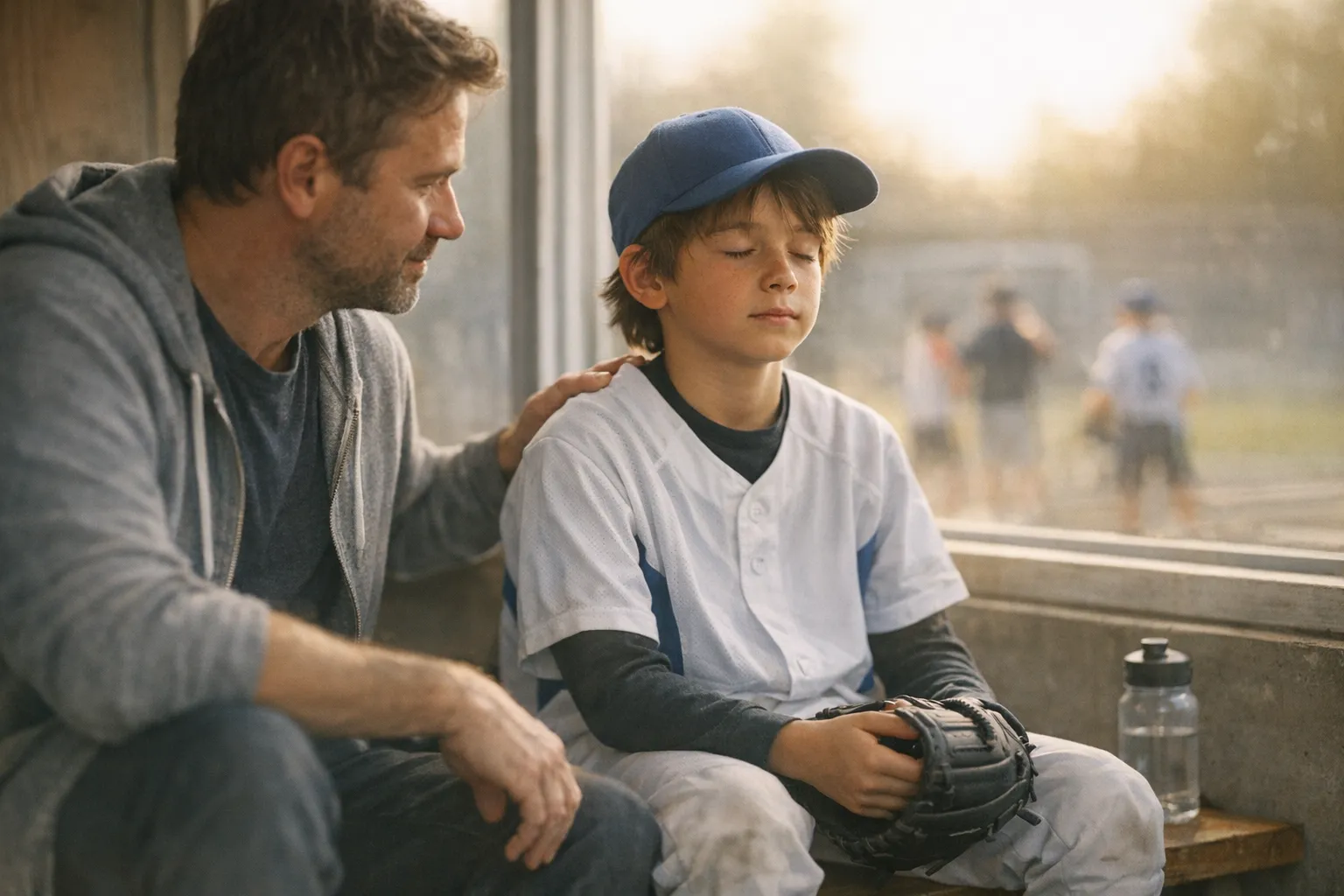
How to Teach and Model Mindfulness for Kids in High-Stress Sports Moments
When children play competitive sports, they are not only learning skills, strategy, and teamwork. They are also learning what pressure feels like in the body, what mistakes mean, and how to respond when nerves, disappointment, or self-doubt show up. For many parents, the goal is not simply to help a child perform better. It is to help them stay steady, resilient, and connected to themselves under stress.
Mindfulness can be one useful part of that picture. In simple terms, mindfulness means paying attention to what is happening right now with openness and without immediately getting swept away by it. For young athletes, that can look like noticing a racing heart before a game, taking one slower breath after an error, or returning attention to the next play instead of spiraling about the last one.
Just as important, mindfulness at home can support the whole family. When parents model calm, repair after tense moments, and relate to performance with perspective, children absorb more than instructions. They absorb a way of being. If this topic resonates, you may also appreciate Why Teaching Mindfulness and Emotional Regulation to Kids Matters for the Whole Family and How to Support Your Kids in Sports Without Damaging Your Relationship.
Why mindfulness helps in high-stress sports situations
High-pressure moments in sport often trigger a very normal stress response. A child may feel tight muscles, shallow breathing, tunnel vision, self-critical thoughts, or an urge to panic after a mistake. None of this means they are weak or unprepared. It means their nervous system is doing what nervous systems do under pressure.
Mindfulness does not erase stress. It helps kids recognize stress earlier, stay more grounded inside it, and recover faster when things do not go as planned. In performance settings, that can support concentration, emotional regulation, decision-making, and confidence that feels earned rather than forced.
From a relationship perspective, mindfulness also changes the emotional climate around sports. Instead of parents becoming the external nervous system for the child through overcoaching, criticism, or visible anxiety, they can become a steadying presence. That shift matters. Children often perform best when they feel both supported and emotionally safe.
Start with the real goal: regulation, not perfection
Many parents understandably hope mindfulness will make their child calmer, tougher, or more successful. Sometimes it does help in those ways. But a healthier aim is regulation, not perfection.
Regulation means your child can notice what is happening inside them and use a simple skill to come back toward balance. They may still feel nervous before a race. They may still cry after a hard loss. They may still get frustrated after striking out. Mindfulness is not about eliminating emotion. It is about building the capacity to stay in relationship with emotion without being run by it.
That mindset can protect kids from a common trap: believing that difficult feelings are failure. In reality, pressure is part of growth. The skill is learning what to do next.
The most powerful teaching tool is your example
Children rarely learn mindfulness because a parent delivers a perfect explanation. They learn it because they see it lived.
If you want your child to pause, breathe, and reset, they need to see you do the same. If you want them not to collapse after mistakes, they need to hear you speak gently to yourself when you get something wrong. If you want them to approach competition with focus instead of fear, it helps if they see you approach stressful family moments with steadiness.
This does not require being endlessly calm. In fact, it is often more powerful when children see repair. You might say, I was getting tense in the car before your game, so I took a few breaths to settle myself. Or, I noticed I got too intense after that call. I want to try that again more calmly. That kind of modeling teaches self-awareness, accountability, and emotional flexibility.
If you are parenting as a couple, this is especially important. Kids are highly attuned to the emotional field around them. When parents manage sports stress in a more coordinated way, children often feel less pressure. For relationship support around communication and teamwork, see /for-couples and Building Stronger Relationships Through Effective Communication.
Keep mindfulness concrete and age-appropriate
For kids, mindfulness works best when it is simple, brief, and tied to real situations. Long explanations and abstract language often miss the mark. What helps more is giving children small, repeatable tools they can use before, during, and after stressful moments.
For younger children
- Belly breathing: Have them place a hand on their stomach and feel it rise and fall for three slow breaths.
- Name three things: Ask them to notice three things they can see, two they can feel, and one they can hear.
- Reset word: Use one simple phrase like next play, steady, or breathe.
For older children and teens
- Performance breath: Inhale slowly, exhale a little longer, and repeat for two or three cycles.
- Body scan: Notice where the body feels tight, then soften the jaw, shoulders, or hands.
- Thought labeling: Teach them to notice that is a worry thought rather than treating every thought as a fact.
- Refocus cue: Choose a cue like one moment at a time or do the next job.
The goal is not to give kids ten techniques. It is to help them learn one or two that feel natural enough to use when stress rises.
Practice outside the pressure, not only in the pressure
One of the biggest mistakes families make is waiting until a child is already overwhelmed to introduce regulation skills. Under intense stress, new tools are harder to access. It is much more effective to practice when the stakes are low.
That might look like taking three breaths together before school, doing a one-minute body check in the car, or pausing after practice to ask, What did you notice in your body today when things got hard? These short moments help mindfulness become familiar rather than something the child is told to do only when they are struggling.
Think of it like physical training. Repetition matters. A pre-performance routine, however small, helps the nervous system know what to do under pressure.
Build a simple sports mindfulness routine
Children do well with structure. A repeatable routine can make high-stress situations feel more manageable.
Before the game or event
- Pause for one minute of slower breathing.
- Name what the body feels without judgment: butterflies, energy, tight shoulders.
- Use one grounding phrase: I can feel nervous and still play.
- Focus on one controllable intention such as effort, listening, or recovery after mistakes.
During competition
- Use one breath after mistakes or breaks in play.
- Relax one body area like the jaw, shoulders, or hands.
- Repeat a cue phrase such as next play.
- Bring attention back to the present task.
After competition
- Let the body come down first before analyzing performance.
- Ask what they noticed, not only how they performed.
- Identify one thing that helped and one thing to practice next time.
If your child is serious about sports, you may also find value in /for-athletes, The Quiet Mind Advantage: How an Athlete’s Mental State Shapes Performance, and A Practical Mental Game Playbook for Better Sports Performance.
Use language that lowers shame and supports learning
The way parents speak after hard moments can either deepen a child’s resilience or intensify their stress. Mindfulness-based parenting language tends to be observant, grounded, and non-shaming.
Helpful examples include:
- I could see that moment got big for you. Want to take a breath and talk about it?
- What happened in your body when you got nervous?
- What helped you come back after that mistake?
- You do not need to pretend you were not upset. Let’s notice it and reset.
Less helpful responses often sound like pressure, fixing, or dismissal:
- Relax.
- Do not think about it.
- You just need to be tougher.
- Why did you do that?
Children usually do better when they feel understood before they are coached. That does not mean lowering standards. It means creating enough emotional safety for learning to happen.
This is especially important for boys and teens who may already receive messages that difficult feelings should be hidden or hardened against. Related reading: /for-boys and Emotions and Feelings for Men and Boys: A Practical Guide to Naming What’s Going On and Strengthening Relationships.
What if your child resists mindfulness?
Resistance is common, especially if mindfulness is introduced in a way that feels preachy, performative, or like one more demand. Some children hear, Use your breathing, as criticism rather than support.
If that happens, simplify and soften. Try shorter practices. Ask permission. Make it collaborative. Instead of telling them what to do, you might say, Want to experiment with one reset tool and see if it helps? You can also connect the skill to something they care about, such as recovering faster after mistakes or feeling less flooded before competition.
Sometimes the child is not the only one resisting. Parents may carry their own anxiety, perfectionism, or unfinished sports wounds into the experience. If your child’s competition brings up a lot in you, that is not something to shame yourself for. It is something to notice. Your own regulation is part of the intervention.
When to consider extra support
Mindfulness tools can be very helpful, but they are not a cure-all. If a child is experiencing intense anxiety, panic symptoms, persistent emotional distress, or a strong fear of performance that is affecting daily life, extra support may be wise. Coaching or therapy can help families understand what is driving the stress and how to respond in a more tailored way.
Sometimes the work is not only about the child’s performance. It is about family pressure, conflict between parents, communication patterns, or the way achievement has become tied to worth. These are relational issues as much as sports issues.
If you are unsure where to start, /coaching-vs-therapy and /what-to-expect-in-therapy may help clarify options.
The deeper lesson kids carry beyond sports
Competitive sports can be a meaningful place to teach mindfulness because pressure makes inner patterns visible. But the deepest value of these skills goes far beyond the field, pool, rink, or court.
A child who learns to notice their body, name their emotions, steady themselves under stress, and recover after mistakes is building capacities that support friendships, school, family life, and later intimate relationships. They are learning that emotions are manageable, performance is not identity, and hard moments can be met with awareness rather than collapse.
That is one reason this work matters so much for couples and families. The way we teach regulation in one area of life tends to ripple outward into many others. Mindfulness in sports is rarely just about sports. It is often about raising a child who can stay connected to self and others when life gets hard.
If you want support creating a calmer, more connected approach to parenting, performance pressure, or family communication, Strong & Connected can help. You can learn more about the practice or book a consultation.
Frequently Asked Questions
How can I teach my child mindfulness for sports without making it feel forced?
Keep it short, practical, and tied to real moments. Start with one simple tool like three slow breaths or a cue phrase such as "next play," and practice it outside competition first.
What is the best mindfulness technique for kids before a big game?
A brief breathing routine is often the easiest place to start. Two or three slow breaths, paired with relaxing the shoulders and naming one focus point, can help settle the body and sharpen attention.
Can mindfulness actually help kids perform better in competitive sports?
It can help many kids regulate nerves, recover after mistakes, and refocus on the present task. Better performance may follow, but the primary benefit is steadier regulation under pressure.
What should parents say when a child gets upset after a mistake in sports?
Start with calm observation and support. Try saying, "That looked tough" or "Want to take a breath and reset together?" before offering feedback or analysis.
When should a family seek professional support for sports anxiety in kids?
Consider support if anxiety is intense, persistent, or affecting sleep, mood, school, or willingness to participate. Extra help can also be useful when sports stress is creating significant conflict at home.