How to Support Your Kids in Sports Without Damaging Your Relationship
Many parents want the same basic thing in youth sports: for their child to grow, enjoy themselves, and benefit from being part of a team. They hope sports will build confidence, discipline, friendships, and resilience. Sometimes that happens. Sometimes, though, the pressure surrounding sport starts to crowd out the very qualities parents were hoping to nurture.
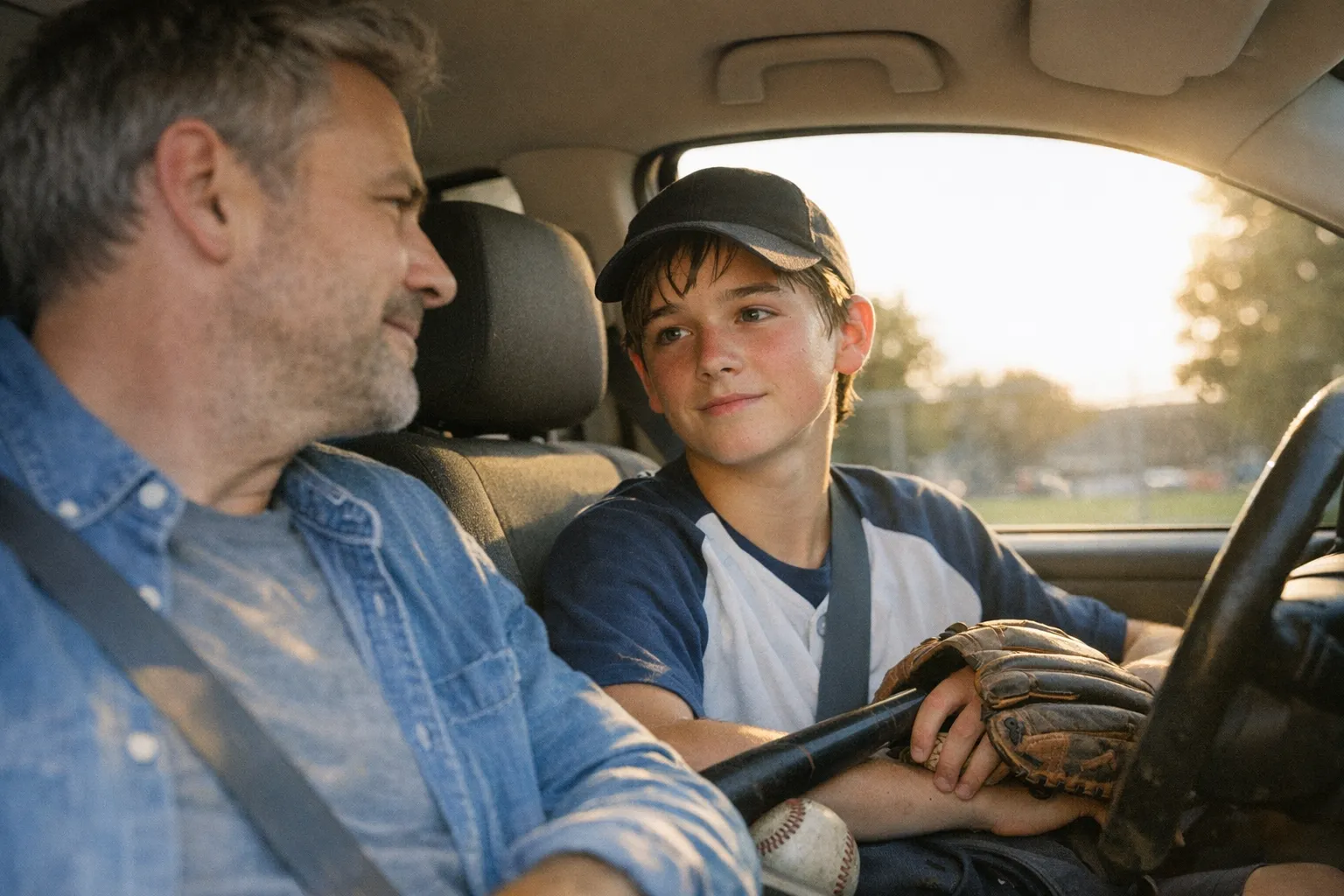
One of the most memorable findings in youth sport research comes from hockey. Former elite youth hockey players have described the car ride home with dad as the worst part of their sport experience. That line has stayed with many parents and coaches because it names something painfully familiar: the moments after competition can become emotionally loaded, corrective, and tense. Even when a parent means well, a child may experience post-game analysis as disappointment, judgment, or conditional approval.
More recent peer-reviewed research continues to support a similar message. Children tend to do better in sport when parents provide emotional support, practical structure, and encouragement without becoming overly controlling, excessively critical, or too focused on outcomes. Research in sport psychology has repeatedly found that a task-focused climate, where effort, learning, enjoyment, and skill development are emphasized, is associated with healthier motivation and well-being than an ego-focused climate built around comparison, status, and fear of mistakes.
For couples and co-parents, this matters too. Youth sports can quietly become a relationship stressor. Parents may disagree about how hard to push, what counts as support, whether a coach is the problem, or how to respond when a child wants to quit. If those tensions are not handled thoughtfully, the child is not the only one carrying pressure. The couple relationship often starts carrying it too.
The good news is that supportive sport parenting is learnable. You do not need to be perfect. You do need to be intentional.
What the research suggests children need from parents in sport
Across recent peer-reviewed studies in youth sport, a consistent pattern shows up: children benefit when adults help them feel safe, seen, and supported. That usually includes a few core ingredients.
- Emotional steadiness: Children perform and recover better when they do not feel that love, approval, or closeness depends on results.
- Autonomy support: Young athletes do better when they have some voice, choice, and ownership, rather than feeling overmanaged.
- Process focus: Emphasizing effort, learning, teamwork, and coping tends to support long-term development better than obsessing over wins, rankings, or mistakes.
- Healthy involvement: Practical support matters. So does knowing when to step back.
- Attuned communication: Children are more receptive when parents listen first and coach less.
This fits with self-determination research in sport, which suggests that motivation is stronger and more sustainable when children experience competence, autonomy, and connection. In plain language: kids thrive when they feel capable, when they have some agency, and when the relationship with important adults feels secure.
When those needs are not met, sport can become psychologically expensive. Children may look fine from the outside while internally carrying anxiety, dread, shame, or fear of letting someone down.
Why the car ride home matters so much
The car ride home is often a small emotional pressure cooker. Your child is trapped in a confined space, physically tired, emotionally exposed, and often still processing what just happened. They may already know what they did wrong. They may be replaying a missed pass, a fall, a penalty, or time on the bench. They may also be scanning your face and tone for one deeper question: Am I okay with you right now?
If the first thing they hear is tactical feedback, criticism, or disappointment, the child may learn to associate sports not with growth and joy, but with evaluation and tension.
That does not mean parents should never talk about performance. It means timing, tone, and consent matter. A child usually needs regulation before reflection. They need connection before correction.
A useful rule of thumb: right after a game or practice, your first job is not analysis. Your first job is nervous system support.
That can sound very simple:
- “I love watching you play.”
- “I’m glad I got to be here.”
- “Do you want to talk about the game, or just head home?”
- “You worked hard today.”
For many children, that kind of response creates enough emotional safety that a more thoughtful conversation can happen later, if needed.
What recent peer-reviewed research says about pressure, motivation, and burnout
Recently published peer-reviewed research in youth sport continues to point to a familiar but important conclusion: parental involvement can be deeply helpful or surprisingly harmful, depending on how it is expressed.
Studies on motivational climate have found that when adults focus heavily on outperforming others, avoiding mistakes, and meeting high external expectations, young athletes are more likely to report stress, perfectionism, reduced enjoyment, and symptoms associated with burnout. By contrast, when the environment emphasizes mastery, improvement, and effort, young athletes tend to show healthier motivation, greater persistence, and stronger emotional well-being.
Research on parental pressure also suggests that children are particularly sensitive not only to overt criticism, but to subtle relational signals: sighs after mistakes, coldness after a poor performance, repeated technical advice when it was not requested, or making family mood depend on sport results. None of this requires a parent to be harsh in an obvious way. Sometimes pressure is communicated through disappointment that is felt more than spoken.
There is also growing research on the importance of enjoyment in sustaining sport participation. Enjoyment is not a soft extra. It is one of the strongest predictors of whether children stay involved in sport over time. If every practice and game starts to feel like an audition for adult approval, the child may keep performing for a while, but the relationship to sport often narrows. Over time, anxiety and exhaustion can replace curiosity and play.
In practical terms, this means supportive parenting is not about lowering standards or pretending performance does not matter. It is about organizing the experience so that the child can develop skills without feeling that their value rises and falls with each result.
How parents can support kids in sports in everyday life
1. Separate your child’s performance from their worth
Your child is not their stat line, ice time, score, or coach feedback. This sounds obvious, but children often absorb the opposite message when adults become emotionally intense around performance.
Try to communicate, in words and in tone, that your relationship remains steady whether they had a great game, a rough game, or did not play much at all.
2. Ask more than you tell
Instead of offering immediate instruction, try questions that invite reflection:
- “How are you feeling about today?”
- “What felt good?”
- “What was hard?”
- “Do you want support thinking it through, or do you want to leave it for now?”
This helps children develop self-awareness and autonomy. It also lowers defensiveness.
3. Keep post-game conversations short and gentle
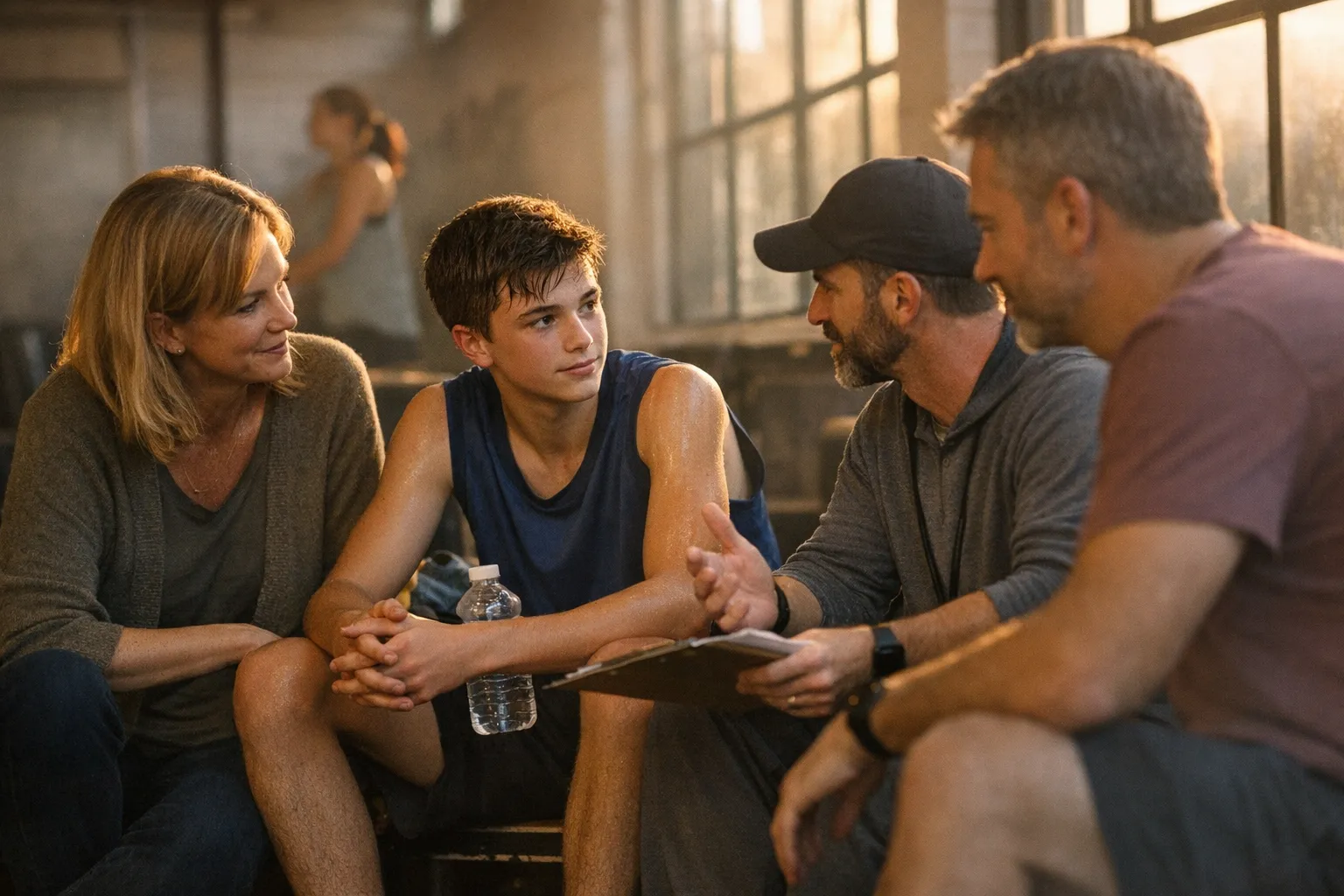
Most children do not need an immediate debrief. They need food, water, quiet, and emotional decompression. If the child brings it up, listen. If not, let the moment breathe.
For some families, it helps to create a clear ritual: no technical feedback in the car unless the child asks for it.
4. Notice your own triggers
Parents often bring their own history into the stands and the car. Maybe sport was where you felt competent. Maybe nobody encouraged you, so you are determined to give your child every opportunity. Maybe achievement became your way of earning love, and now your child’s sport unconsciously activates old hopes or old wounds.
That does not make you a bad parent. It makes you human. But it does mean your self-awareness matters. If you notice yourself getting flooded, rigid, or overly invested, pause. The goal is not to become detached. The goal is to remain grounded enough to be a safe base.
If this theme resonates, you may also appreciate Building Emotional Intelligence for Stronger Relationships.
5. Support the whole child, not just the athlete
Children need identities bigger than sport. Protecting sleep, downtime, friendships, family rhythms, and space for other interests helps reduce the risk that sport becomes their only source of confidence or belonging.
This is especially important for highly driven kids who seem mature and committed. Their determination can be admirable, but it can also hide fatigue and fear.
6. Coordinate as co-parents
Few things are more stressful for a child than feeling caught between parents with different sport agendas. If one parent is pushing hard and the other is trying to soften the pressure, the child may end up managing the adults instead of focusing on their own experience.
Have private conversations about your values. Ask each other:
- What do we want our child to learn from sport?
- What matters more to us: short-term performance or long-term well-being and development?
- What kind of atmosphere do we want in the car, at games, and at home?
If you and your partner get stuck in these conversations, support may help. Stronger communication patterns can make a real difference, both for your child and for your relationship. You can explore more at /for-couples.
What to say instead of post-game critique
Parents often ask for practical language, because many of us default to advice when we feel anxious or invested. Here are a few alternatives that tend to preserve connection while still showing interest.
After a game or practice
- “I loved getting to watch you.”
- “You don’t need to talk yet if you don’t want to.”
- “Would a snack and some quiet help?”
- “I’m proud of how you kept going.”
When your child is disappointed
- “That looks like it really hurt.”
- “I can see why you’re upset.”
- “Do you want comfort, problem-solving, or space?”
When your child wants feedback
- “I’m happy to talk about it. Do you want me to just listen first, or share what I noticed?”
- “What do you think you want to work on next?”
This approach is not passive. It is responsive. It helps the child build reflection without feeling invaded.
When a child wants to quit
Few sport parenting moments create more tension than hearing, “I want to stop.” Sometimes a child is appropriately responding to burnout, a poor fit, or an unhealthy environment. Sometimes they are discouraged and need help tolerating frustration. The task is not to react quickly. The task is to get curious.
Ask what is underneath the wish to quit:
- Is it pressure?
- Is it fear of failure?
- Is it social conflict?
- Is it exhaustion?
- Is it that they genuinely no longer enjoy it?
Children often need help distinguishing, “This is hard and I’m discouraged,” from, “This really is not right for me anymore.” A calm conversation, ideally not in the heat of a bad day, is usually more useful than immediate persuasion or immediate permission.
If sport has become a source of conflict in the family, it may be worth stepping back and looking at the larger relational pattern. Articles like How to Listen Like Chris Voss Without Turning Your Relationship Into a Negotiation and Building Stronger Relationships Through Effective Communication can help you slow the cycle down.
The deeper goal: raising a person, not just an athlete
At its best, sport can teach persistence, humility, teamwork, courage, and recovery after disappointment. But those lessons do not come mainly from lectures. They come from the emotional climate around the child.
If your child learns, “I am loved when I perform,” sport may shape them in one way. If they learn, “I am supported, and I can face challenge without losing connection,” sport may shape them in another.
That difference matters far beyond the rink, the field, or the gym. It affects how children handle stress, how they relate to authority, how they speak to themselves after mistakes, and how safe they feel in close relationships later in life.
You do not need to remove all challenge. Children grow through challenge. What they do not need is to carry adult anxiety on top of it.
If you want your child to enjoy sport, stay engaged, and develop both skill and character, the research points in a clear direction: be warm, steady, and curious. Support effort. Respect recovery. Let the relationship be bigger than the result.
If you would like help navigating parenting pressure, co-parenting tension, or the relationship strain that youth sports can expose, book a consultation. Stronger, calmer patterns at home often help everyone breathe easier.
Frequently Asked Questions
How can parents support their kids in sports without adding pressure?
Focus on effort, enjoyment, and learning more than results. Listen first, keep post-game feedback brief, and make sure your child feels valued whether they played well or not.
Why is the car ride home after sports so important?
Right after games, children are often tired, emotional, and highly sensitive to tone. Supportive, low-pressure conversations help them recover better than immediate critique or analysis.
What should I say to my child after a bad game?
Try simple, regulating language such as, “I loved watching you,” or “Do you want to talk now or later?” Validation and calm presence are usually more helpful than technical feedback in the moment.
Can parents cause burnout in youth sports?
Parental pressure can contribute to stress and burnout, especially when children feel criticized, overmanaged, or valued mainly for performance. Warmth, autonomy support, and realistic expectations are protective.
What if parents disagree about how involved to be in their child’s sports?
Have private conversations about your shared values, the kind of atmosphere you want for your child, and how to handle games, coaches, and setbacks. If conflict keeps repeating, outside support can help you get on the same team.