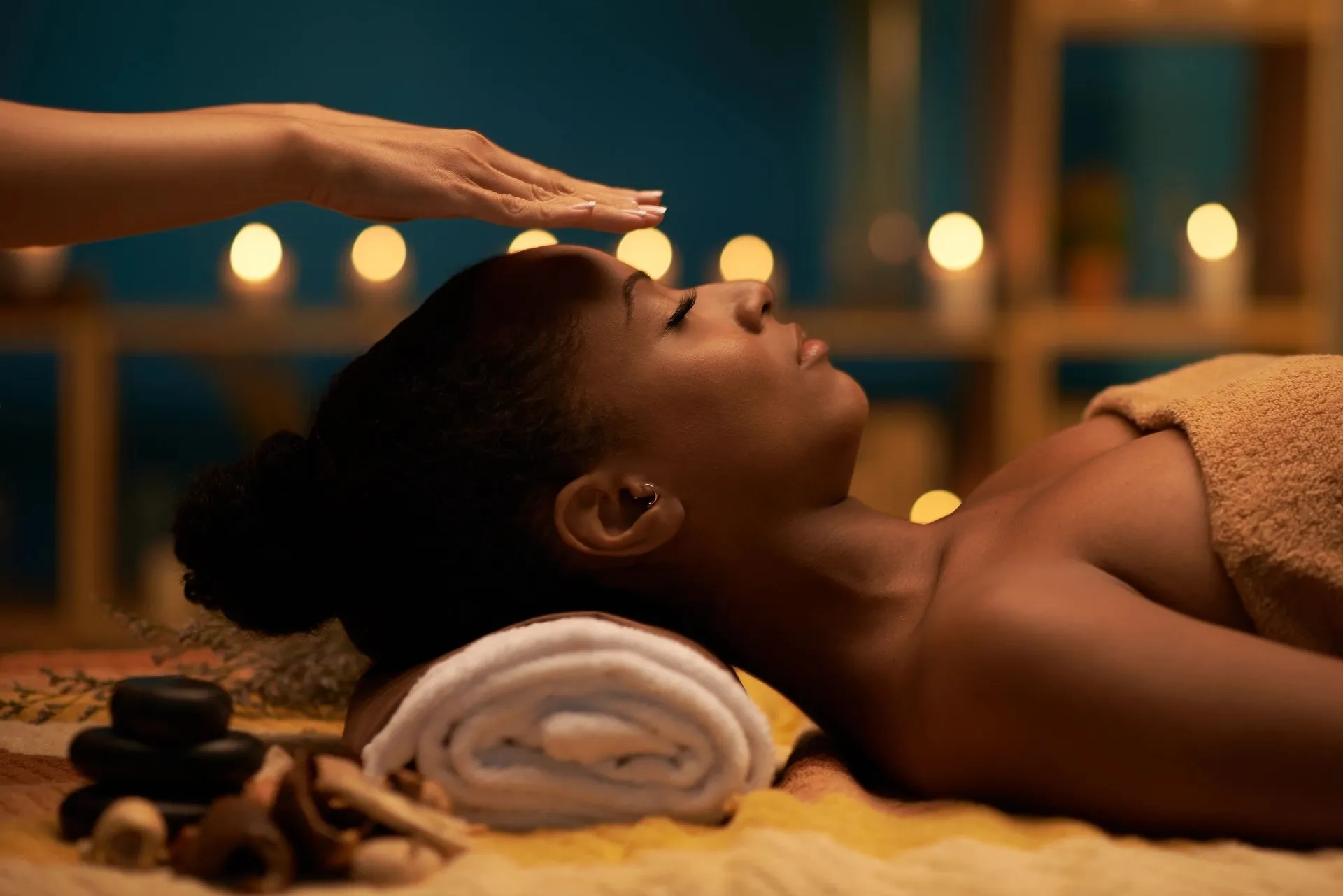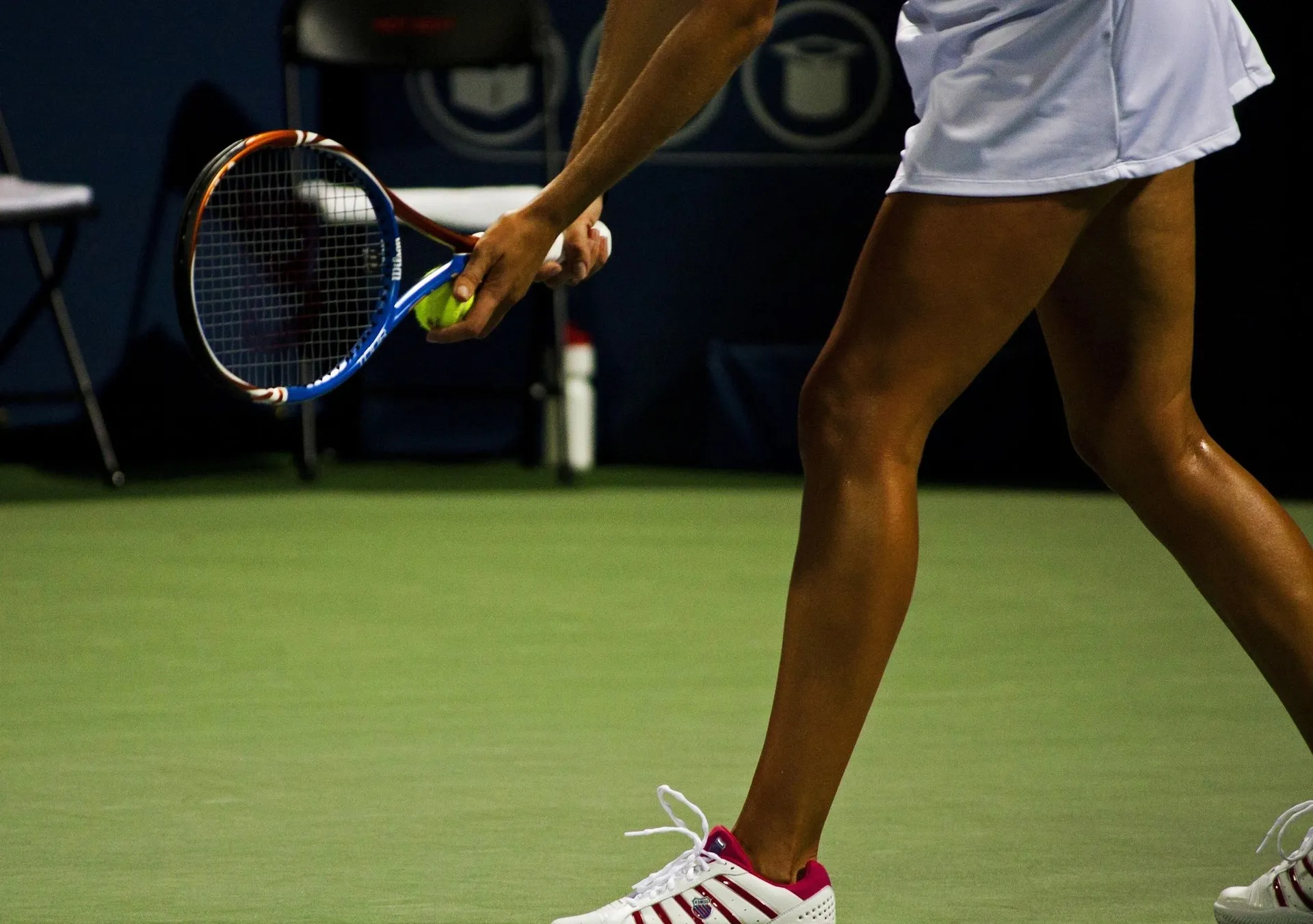
“Flow” is what athletes call being in the zone: time slows down, decisions feel automatic, and your body does what you trained it to do. Mindfulness is one of the most reliable ways to increase the odds of getting there—because it trains attention, emotional regulation, and psychological flexibility under pressure. Large reviews and meta-analyses generally find mindfulness-based interventions show positive trends for sport performance and related mental skills (with the usual caveat: study quality varies, and effects differ by sport, program, and athlete). (PMC)
This post gives you a simple, repeatable set of mindful + flow exercises you can use in tennis (and translate to golf, basketball, soccer, running, weightlifting, surfing—anything).
What “flow” actually needs
Classic flow research describes flow as most likely when there’s clear goals, immediate feedback, and the challenge matches your skill (hard—but doable). (amazon.com) Sport-specific research echoes that flow can be experienced in elite sport and is influenced by factors like attentional focus, confidence, preparation, and environment (and it’s not fully “controllable,” but it is trainable). (ScienceDirect)
In athlete terms: Flow happens when your attention is stable, your body is regulated, and your inner critic isn’t driving the steering wheel.
That last point is straight out of one of the most respected tennis mental-game books ever written—The Inner Game of Tennis—which frames performance problems as “Self 1” (the judging, controlling mind) interfering with “Self 2” (the trained body). (amazon.com)
Why mindfulness boosts performance
Mindfulness isn’t “positive thinking.” It’s training the skill of paying attention on purpose, in the present, without getting dragged around by judgment and emotion. (This is the backbone of Kabat-Zinn’s work and modern mindfulness-based approaches.) (Google Books)
In sport psychology, mindfulness/acceptance approaches (including the MAC approach and Mindful Sport Performance Enhancement) target:
- attentional control (staying with the task),
- acceptance (not fighting nerves or mistakes),
- values-driven behavior (doing what matters under pressure). (Google Books)
The 3-part “Mindful Flow” routine (10 minutes total)
1) Regulate the nervous system (2 minutes)
Exercise: “Physiological sigh x 5” + soft gaze
- Two short inhales through the nose (top off the lungs), one long exhale through the mouth.
- Keep your eyes soft and wide (not tunnel vision).
Why it works: it downshifts arousal so you’re less likely to rush, grip, and overcontrol—classic “choking” behaviors.
Tennis translation: do this before warm-up and at changeovers.
2) Anchor attention (4 minutes)
Exercise: “Feet–Hands–Target”
- 60 seconds: feel feet in shoes (pressure, texture).
- 60 seconds: feel hands on grip (temperature, tension).
- 60 seconds: look at a target (service box corner, net strap, a cone).
- 60 seconds: repeat the cycle.
The skill you’re building: returning attention to what’s real instead of what your mind predicts.
Other sports translation
- Golf: feet → grip → intermediate target
- Basketball: feet → fingertips → rim
- Running: feet → breath → horizon line
3) Convert mindfulness into flow triggers (4 minutes)
Flow likes clear goals + immediate feedback. (amazon.com) So we add constraints and scoring.
Exercise: “One intention, one cue, one score”
- Pick one intention: “high net clearance” or “deep middle” or “aggressive feet.”
- Pick one cue word: “smooth,” “up,” “snap,” “heavy.”
- Pick one score: “7/10 serves with the same toss” or “10 cross-courts in a row above the net strap.”
This is how you train “flow” without chasing it.
Tennis-specific: the between-point reset (the “anti-tilt” protocol)
Most matches are lost in 15-second emotional spirals: one bad miss → judgment → rushed point → double fault → “here we go again.”
Here’s a repeatable 12-second reset:
- Turn away (break visual contact with the error)
- Exhale long (drop the shoulders)
- Name it once: “frustration” / “tight” / “rushed”
- One instruction: “legs” / “height” / “early prep”
- Commit to the next ball
This aligns with mindfulness/acceptance training: notice what’s here, don’t fight it, do the next right action. Reviews in athletes generally support that mindfulness training can help performance-related outcomes and mental skills (attention, emotion regulation, flow-related variables). (PMC)
“Flow practice” drills you can use in any sport
Constraint drills (flow loves constraints)
- Tennis: only cross-court; only to big target; only with heavy topspin
- Soccer: two-touch max; scan before receiving
- Basketball: finish with left only; free throws with one breathing cycle per shot
“Pressure reps” (make practice feel like competition)
- Play tiebreakers starting down 0–3
- “One serve only” games
- Time-boxed sets (e.g., 7 minutes)
Mindful recovery reps (your secret edge)
Flow depends on recovery as much as intensity. Mindfulness-based protocols are often used alongside broader performance and well-being goals. (ACBS)
Takeaway
The bottom line is flow isn’t a mood—you can train it. The most reliable path is mindful attention (present-moment focus), acceptance (not fighting nerves or mistakes), and practice design (clear goals + immediate feedback + challenge-skill balance). (amazon.com)
How Strong & Connected can help (performance, pressure, and the “inner game”)
Strong & Connected is known for relational skills coaching, but here’s the underappreciated truth: your relationships are part of your performance system.
If you’re an athlete (or a high-performing professional who trains), your results are shaped by:
- how you handle shame, frustration, and self-talk (inner critic),
- how you recover after failure,
- how you communicate with coaches/partners/teammates,
- how you manage conflict and distraction off the field.
Strong & Connected coaching helps you build:
- accountability under pressure (stop the excuses, keep the standards),
- emotional regulation (less tilt, more reset),
- psychological flexibility (do the next right thing even when you’re stressed),
- relational stability (less chaos at home, more bandwidth for training and competition).
If you’re in British Columbia or Ontario or anywhere in Canada and want a structured plan, we can turn the routines above into:
- a pre-match protocol,
- a between-point reset,
- a weekly “flow practice” schedule,
- and a mental skills system that matches your actual life demands.
Suggested internal links (add these on your site):
- Strong & Connected Coaching (Men)
- Strong & Connected Coaching (Teen Boys)
- What is Relational Life Therapy?
- Work With Me / Book a Consult
Suggested external links (learn more):
- Mindfulness training & athlete performance meta-analyses (PMC)
- Flow in elite sport systematic review (ScienceDirect)
- Foundational books: Flow and The Inner Game of Tennis (amazon.com)
References (APA 7)
Csikszentmihalyi, M. (1990). Flow: The psychology of optimal experience. Harper & Row. (amazon.com)
Gallwey, W. T. (1974). The inner game of tennis. Random House. (amazon.com)
Kabat-Zinn, J. (1994). Wherever you go, there you are: Mindfulness meditation in everyday life. Hyperion. (Google Books)
Si, X.-W., et al. (2024). A meta-analysis of the intervention effect of mindfulness training on athletes’ performance. Frontiers in Psychology. (PMC)
Swann, C., Keegan, R. J., Piggott, D., & Crust, L. (2012). A systematic review of the experience, occurrence, and controllability of flow states in elite sport. Psychology of Sport and Exercise, 13(6), 807–819. (ScienceDirect)
Wang, Y., et al. (2023). Effects of mindfulness-based interventions on promoting athletic performance: A systematic review and meta-analysis. (PMC)
Xie, B., et al. (2025). Impact of mindfulness-based interventions on sports performance: An umbrella review of systematic reviews/meta-analyses. (ScienceDirect)
Gardner, F. L., & Moore, Z. E. (2007). The psychology of enhancing human performance: The mindfulness-acceptance-commitment (MAC) approach. Springer Publishing Company. (Google Books)
Kaufman, K. A., Glass, C. R., & Pineau, T. R. (2018). Mindful sport performance enhancement: Mental training for athletes and coaches. American Psychological Association. (ACBS)
If you want, I can also write a tennis-only version of this post (more keyword-dense for “tennis mental game,” “serve yips,” “match anxiety,” “unforced errors,” etc.) and create a downloadable 1-page Flow Routine you can offer as an email lead magnet.